Insights from the Field
Research & Perspectives
Weekly insight from Jennifer Paylor on the forces reshaping how organizations build, deploy, and develop talent in the age of AI.
Your Talent Architecture Is Built for a Workforce That No Longer Exists
The convergence of agentic AI, skill premiums, and the seniorization of entry-level work demands a fundamental redesign — not an upgrade — of how organizations are structured, staffed, and led.
AI isn't just changing what work gets done — it's collapsing the career ladders, compensation logic, and leadership pipelines that organizations have built for decades. CHROs who treat this as a technology adoption problem will lose. Those who treat it as an organizational architecture problem might just win.
 Organizational Design#18
Your Workforce Architecture Is Already Obsolete
AI isn't disrupting your workforce — it's exposing the organizational architecture you built for a different era. The CHROs who thrive won't be the ones who adopted AI fastest; they'll be the ones who redesigned their organizations around what AI actually does to human work.
 Organizational Design#17
The Architecture Is Broken. AI Didn't Break It — It Just Exposed It.
AI isn't disrupting the workforce — it's revealing that the organizational architecture we've been maintaining was already obsolete. The CHROs who thrive will be the ones who stop managing the transition and start designing what comes next.
 Organizational Design#16
Your HR Model Is Already Obsolete. The Question Is Whether You Know It.
The shift from assistive to agentic AI isn't a technology upgrade — it's an architectural event that invalidates the assumptions beneath every HR model built in the last 30 years. The CHROs who thrive won't be those who adopted AI fastest. They'll be those who had the courage to redesign the organization around it.
 Organizational Design#15
You Are Not Managing a Workforce Anymore. You Are Architecting One.
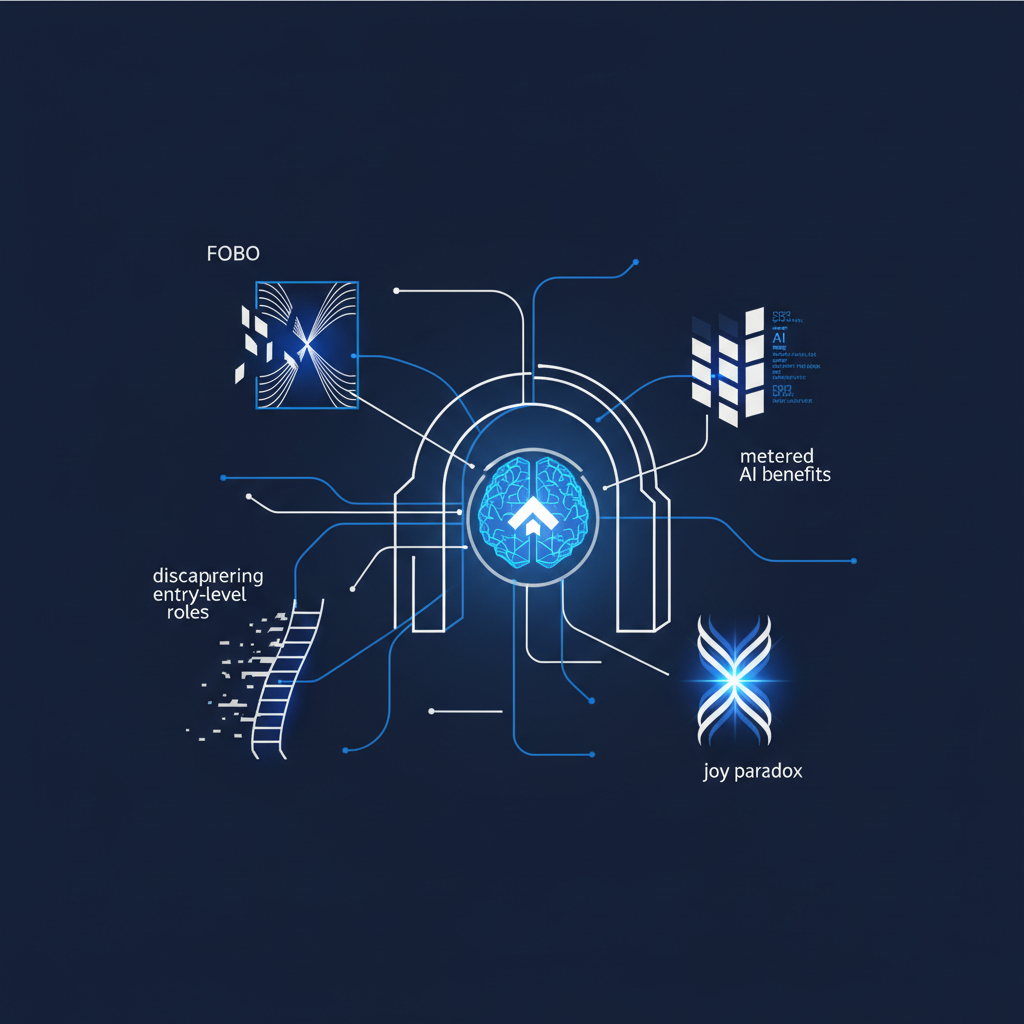
The convergence of FOBO, disappearing entry-level roles, metered AI benefits, and the joy paradox is not a talent crisis — it is an architectural failure. The CHROs who thrive in the next 36 months will be the ones who stop managing people in jobs and start engineering the conditions for human capability to compound.
 Organizational Design#14
Your AI Strategy Is Failing Because You're Still Running a Human-Era Organization
Most organizations are deploying AI on top of organizational structures that were never designed for it — and the result is expensive, performative transformation that changes nothing. The leaders who will survive this moment aren't the ones adopting AI fastest; they're the ones rebuilding the organizational logic underneath it.
 Organizational Design#13
You Didn't Automate Work. You Accidentally Broke the Career Ladder.
The workforce conversation is fixated on today's layoffs, but the real catastrophe is structural: by automating the 'doing' roles that built every senior leader in the room, organizations are quietly destroying the pipeline that produces their next generation of experts. CHROs who don't act now won't just face a skills gap — they'll face an irreversible leadership vacuum.
 Organizational Design#12
Your HR Function Is Not Ready for Agentic AI — And Updating Your Tech Stack Won't Fix That
Most HR leaders are treating AI as a capability upgrade when it is, in fact, an architectural disruption. The organizations that will win the next five years are not the ones who adopted AI fastest — they're the ones who rebuilt their people models around it first.
 Organizational Design#11
Your Workforce Isn't Falling Behind on AI. Your Leadership Architecture Is.
While organizations have poured $581 billion into AI investment, only 19% of employees feel confident using these tools — not because workers are resistant, but because leaders have never redesigned the architecture around them. The gap isn't technological. It's structural, and it's yours to close.
 Organizational Design#10
You Bought the AI. You Forgot to Buy the Organization to Run It.
Seventy-four percent of your frontline employees are using AI every day, and you're still losing the value. The productivity isn't missing — it's leaking through every gap in your organizational design that you haven't yet had the courage to close.
 AI & Workforce#9
Your Workforce Strategy Is Already Obsolete
AI has crossed the threshold from experiment to infrastructure, and the talent architectures most organizations rely on were never designed to survive that crossing. The CHROs who thrive in the next 36 months won't be the ones who adopted AI fastest — they'll be the ones who redesigned their organizations around what AI fundamentally changed.
 Organizational Design#8
Your Employees Are Saving a Day a Week. You Have No Idea What to Do With It.
AI is delivering on its productivity promise, but most organizations are letting the gains evaporate into unstructured cognitive overhead. The CHROs who win the next decade won't be the ones who deployed AI fastest — they'll be the ones who redesigned work around what AI made possible.
 Organizational Design#7
Your Organization Chart Is a Lie
The workforce pyramid isn't being disrupted — it's being dissolved. As 47% of white-collar workers now spend more time managing AI agents than doing their actual jobs, the most dangerous thing a CHRO can do is keep designing for a workforce that no longer exists.
 AI & Workforce#25
AI Isn't the Threat. Your Talent Strategy Is.
Senior leaders are concerned about AI. The deeper concern is what AI exposes: most organizations don't actually know what their people can do, don't deploy talent based on real capability, and don't measure performance in any way that reflects genuine value.
 Organizational Design#6
Your AI Strategy Is Producing Faster Individuals and Slower Organizations
AI adoption without organizational redesign isn't transformation — it's acceleration toward structural collapse. The leaders who will define the next decade are the ones willing to dismantle the workforce models they spent careers building.
 AI & Workforce#5
Your Headcount Plan Is Already Obsolete
Most CHROs are still optimizing a workforce architecture that was designed for a world that no longer exists. The organizations that will win the next five years aren't just adopting AI tools — they're rebuilding the operating logic of work itself.
 Organizational Design#4
Your Org Chart Is a Liability: Redesigning the Workforce for the Agentic Era
As agentic AI begins executing multi-step business processes autonomously, the org charts, job architectures, and management layers we've spent decades building are becoming structural liabilities. The CHROs who recognize this first won't just survive the transition — they'll define what the post-AI enterprise actually looks like.
AI & Workforce#3Your Workforce Architecture Is Already Obsolete
The era of incremental HR transformation is over. What's replacing it isn't a new framework — it's a fundamentally different organizational physics, where AI agents execute workflows, compliance mandates force accountability, and employees are voting with their feet against companies that can't keep pace with their own ambitions.
 AI & Workforce#2
You Didn't Eliminate Junior Roles. You Eliminated Your Future.
AI is not replacing your workforce. It is revealing whether you ever actually had one. The organizations that survive this decade will not be the ones that adopted AI fastest — they will be the ones that redesigned their talent architecture around what humans are irreplaceably for.
 Organizational Design#1
Your AI Adoption Strategy Is Producing Noise, Not Transformation
AI adoption without workforce architecture is just expensive chaos. The real crisis isn't that employees can't keep up with AI — it's that leaders are confusing motion for progress and flooding their organizations with low-quality output while the foundational work of human-AI integration goes undone.
 Compliance & Risk#20
The HR Compliance Crisis Nobody Saw Coming — Updated May 10, 2026
There is a specific kind of organizational risk that doesn't announce itself. It builds quietly, in regulatory dockets and enforcement calendars, while everyone is busy running the business. Right now, four separate regulatory forces are converging on HR and workforce strategy simultaneously. Most CHROs are watching one of them.
 Future of Work#24
Untapped
Every year, the United States spends more than $417 billion on incarceration. Here is what that money does not buy: a future. The same logic destroying lives in the justice system is playing out inside every organization in America — and AI has made the choice unavoidable.
 AI-Native Leadership#23
The AI-Native Leader: Why the Future Belongs to the Most Human Leaders in the Room
There is a conversation happening in boardrooms and business schools that has gotten almost everything wrong about leadership in the age of AI. The leaders who will define the next era of organizational performance are not the ones who mastered the most AI tools. They are the ones who became more human — in a world that desperately needed it.
 AI & The Future of Work#22
John Giannandrea Leaves Apple: When the Best Person for the Job Still Fails
Apple hired one of Google's most brilliant AI minds in 2018. Eight years later, he's quietly walking out the door — and Siri still can't hold a conversation. This isn't a story about one executive's failure. It's a story about what happens when a company hires for capability but never builds for culture. Every CHRO needs to read this.
 AI & The Future of Work#21
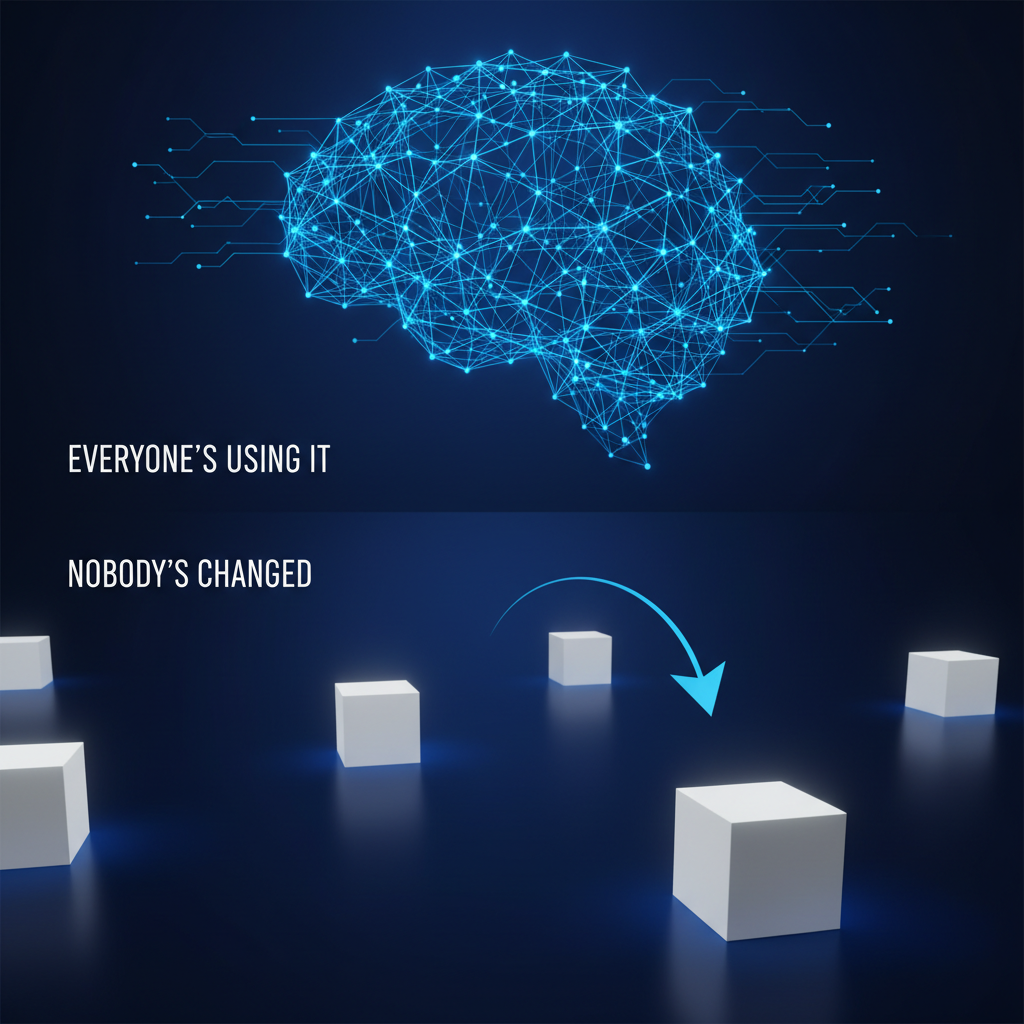
The AI Adoption Paradox: Everyone's Using It, Nobody's Changed
Half of American workers now use AI. Sixty-five percent say it's made them more productive. And yet — only 1 in 10 say AI has transformed how work actually gets done in their organization. That gap isn't a technology problem. It's a leadership problem. And it's sitting squarely in the CHRO's lap.
 Talent Ecosystem#14
Talent Flows to Work — The Internal Marketplace Most Organizations Are Ignoring
The internal talent marketplace model — including the gig portal concept — and why it's now a strategic necessity in the AI era.
 Leadership & AI Readiness#19
AI-Native Leadership Is the New Standard. Two CEOs Just Proved It.
Two of the most powerful executives in American business stepped down this year — not because their companies were failing, but because finishing the AI transformation required a different kind of leader. The boards that made that call are now asking the same question about every layer below.
 Talent Ecosystem#13
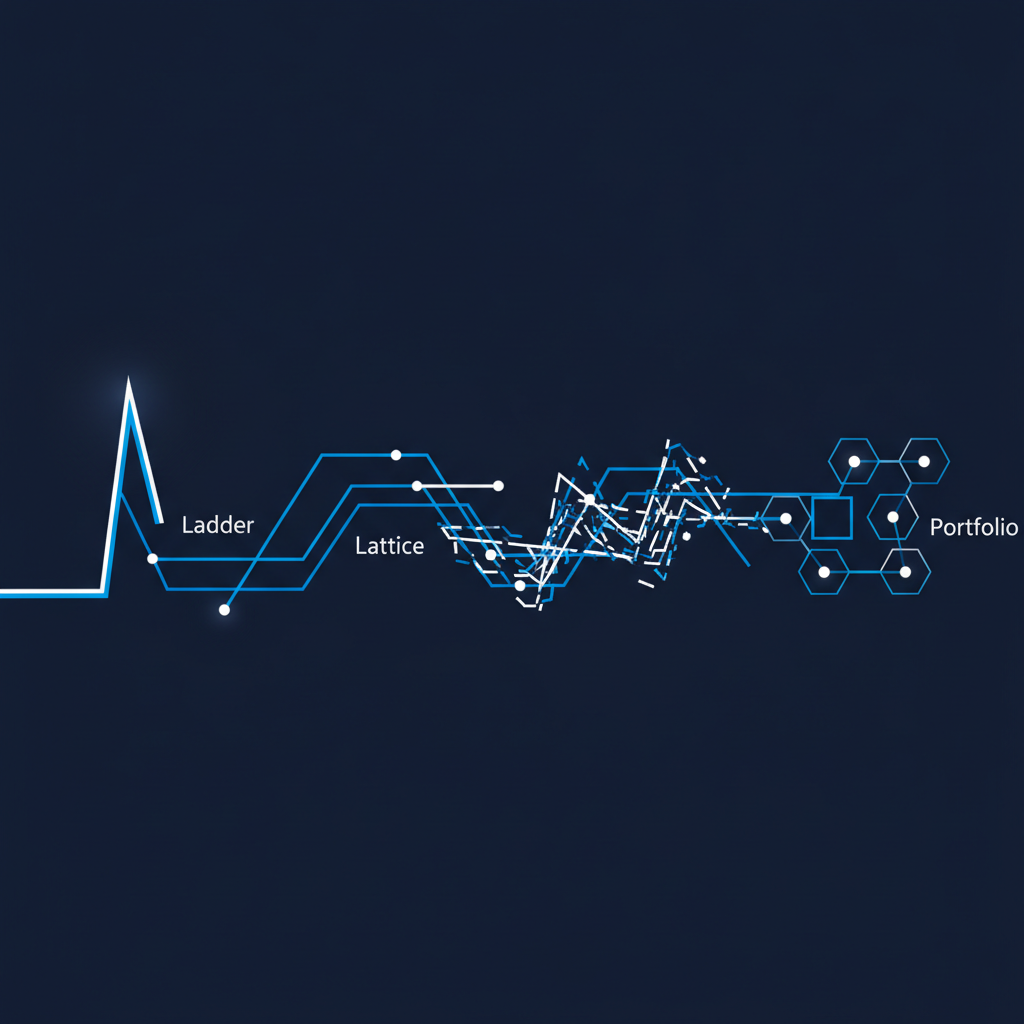
The Career Ladder Was Built for a World That No Longer Exists
Introduces the four-path career model (Ladder, Lattice, Squiggly, Portfolio) as the modern replacement for vertical-only mobility in an AI-augmented, skills-driven economy.
 Skills Strategy#2
Your Organization's Biggest Talent Problem Isn't a Skills Gap — It's a Skills Visibility Gap
Most CHROs name the same problem: a skills gap. The diagnosis is usually wrong. What most organizations have is a skills visibility gap — the skills exist, they're just invisible.
 AI & Workforce#3
Working With AI Is Now a Skill — And Most Organizations Aren't Assessing For It
Every skills taxonomy built between 2014 and 2024 had three layers. That framework is now incomplete. There's a fourth category: human-AI collaboration skills.
 Learning & Development#4
Re-skilling Is No Longer an HR Initiative — It's Survival Infrastructure
The half-life of a skill is shrinking fast. Most organizations respond with programs. Programs are not sufficient for the speed at which skills are expiring.
 Organizational Design#5
Stop Posting Job Descriptions. Start Mapping Outcomes.
The job description is one of the most expensive documents in your organization — and most of them are doing active damage to your talent pipeline.
 Transformation#6
The Hidden Reason Most Transformations Fail — And How to Navigate It
Skills-first transformations consistently encounter the same obstacle. Not technology. Not budget. People with power who have the most to lose.
 Leadership#7
If You're Still Reviewing Employees on Activity Metrics, You're Measuring the Wrong Things
Ask most managers what they're really evaluating in a performance review. Beneath the formal language, it comes down to: was this person easy to work with and did they show up. Neither measures value.
 Transformation#12
What Makes a Transformation Stick
Most transformations don't fail at launch — they fade. The difference is what happened when the champion left, the budget tightened, and new priorities arrived. Sustainability has to be designed in from the start.
 Talent Models#1
The Utilization Model Is a Burning Platform — And AI Just Poured Gas on It
Most organizations don't know their talent model is broken — until AI makes it impossible to ignore. The utilization model doesn't survive contact with AI.
New insights every week.
Jennifer publishes a new perspective every week on what's changing in talent, AI, and organizational design.
Take the Assessment & Stay Connected →© 2026 People Engineer · Jennifer Paylor · All Rights Reserved